Categories
Video

Webinar: How can BPE support the Warm Homes Plan

This webinar took place on Tuesday 24th February 2026

With the UK government’s Warm Homes Plan now officially announced, energy efficiency and retrofit policy are back at the top of the national agenda. The plan sets out up to £15 billion of public investment over this parliament to upgrade up to five million homes, cut energy bills, tackle fuel poverty and support net zero goals by promoting solar panels, heat pumps and low-carbon technologies with a mix of grants and new low or zero interest loans.

This webinar, the first in a series supported by Knauf Energy Solutions, was chaired by Professor David Glew, Director of the Leeds Sustainability Institute and a board member of the Good Homes Alliance, and will look at how Building Performance Evaluation (BPE) methods are essential to turning policy ambition into real benefits for households and for climate outcomes.

Professor Glew was be joined by Barry Lynham from Knauf Energy Solutions who will present on Knauf’s SMETERS work, showing how smart metering and monitoring data can help build the evidence base needed to improve retrofit quality and ensure delivered performance matches design expectations.

We were also delighted to be joined by Rachael Owens, Co-Director of the National Retrofit Hub who will help ‘set the scene’ by updating how the Warm Homes Plan will impact the wider retrofit agenda.

Plus, we’ll heard from Carly Woodbridge, Lead Projects Manager at Clarion Housing Group who will provide the housing association perspective on how BPE could be utilised as part of the Warm Homes Plan to ensure good outcomes for their tenants, building stock and the environment, including lessons learned from past post occupancy evaluation (POE) and resident engagement projects.

This session is especially relevant for local authorities, housing providers, designers, contractors and retrofit practitioners who are interested in practical pathways to delivering the Warm Homes Plan’s objectives.

Chapters and presentations

00:00:00 Welcome and introduction: Professor David Glew, Director of the Leeds Sustainability Institute and a board member of the Good Homes Alliance

00:07:03 How the Warm Homes Plan will impact the wider retrofit agenda: Rachael Owens, Co-Director of the National Retrofit Hub

00:16:59 Knauf’s SMETERS work: Barry Lynham, Knauf Energy Solutions

Download presentation

00:34:20 The housing association perspective on how BPE could be utilised as part of the Warm Homes Plan to ensure good outcomes for their tenants, building stock and the environment: Carly Woodbridge, Lead Projects Manager at Clarion Housing Group

Download presentation

00:50:34 Q&A

Recording


Categories
Guidance

Data interpretation, reporting and taking action – BPE Module 4

This series of guidance documents aims to help anyone involved in a building project to understand what Building Performance Evaluation (BPE) is and how it can increase occupant satisfaction, lower environmental impact, and reduce risk.

There are 5 separate training modules. A fuller description of all of these is provided in Module 1.

  1. BPE: What, why and the benefits that it brings
  2. Planning a BPE: Where to start and common techniques
  3. Undertaking dwelling BPE
  4. Data interpretation, reporting and taking action
  5. The performance golden thread: BPE and robust QA (coming soon!)

Module 1 explains what BPE is and why we need it, Module 2 discusses how to begin a BPE programme, and Module 3, describes how data is collected and analysed. This module, Module 4, explores what happens next: how we interpret data, communicate it to different audiences, and use it to take meaningful action. This stage is essential to quality BPE, it requires interpretation of data to determines the reliability and relevance of findings, and appropriate reporting of insights for different stakeholders is needed to ensure outcomes and lessons learned are identified.

All modules are freely available to download from the GHA Knowledge Base.

Module 4 is authored by Dr Kate van Someren & Dr Samantha Mudie with contributions and peer review from Prof David Glew and Dr Tom Dollard.

The development of the guides have been supported by Ecology Building Society.

Download

Categories
Case Study

Marleigh Active Homes

Summary

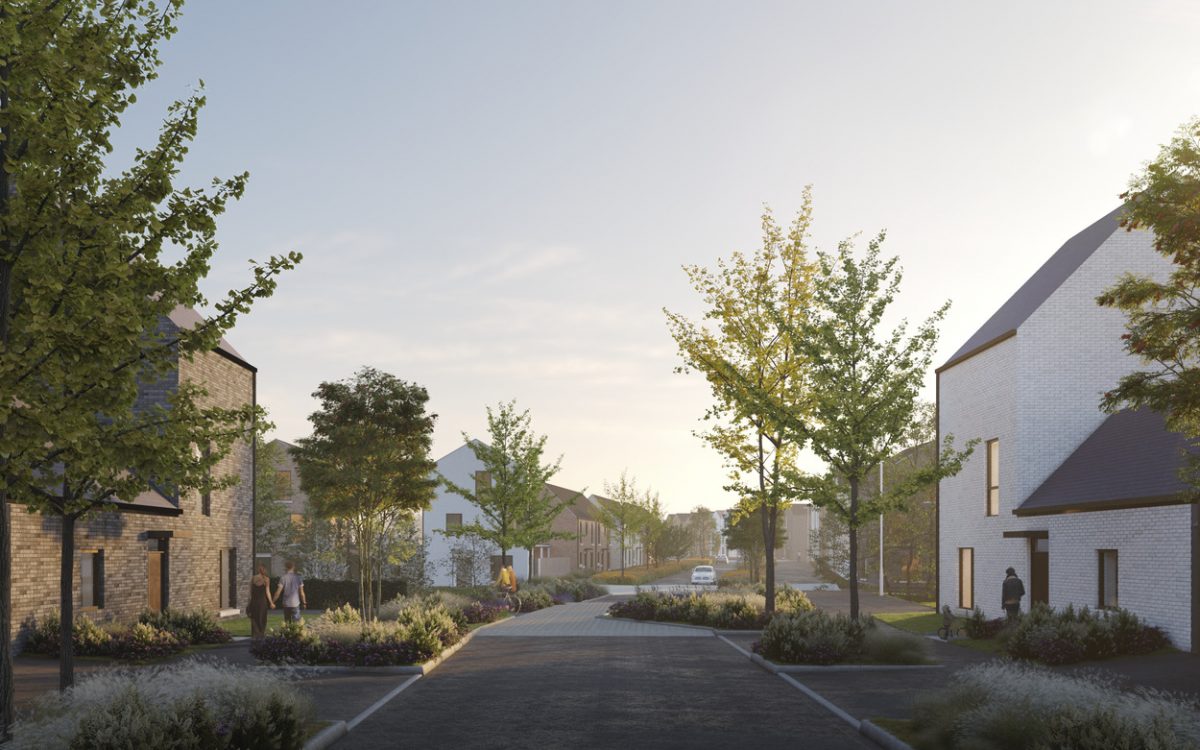
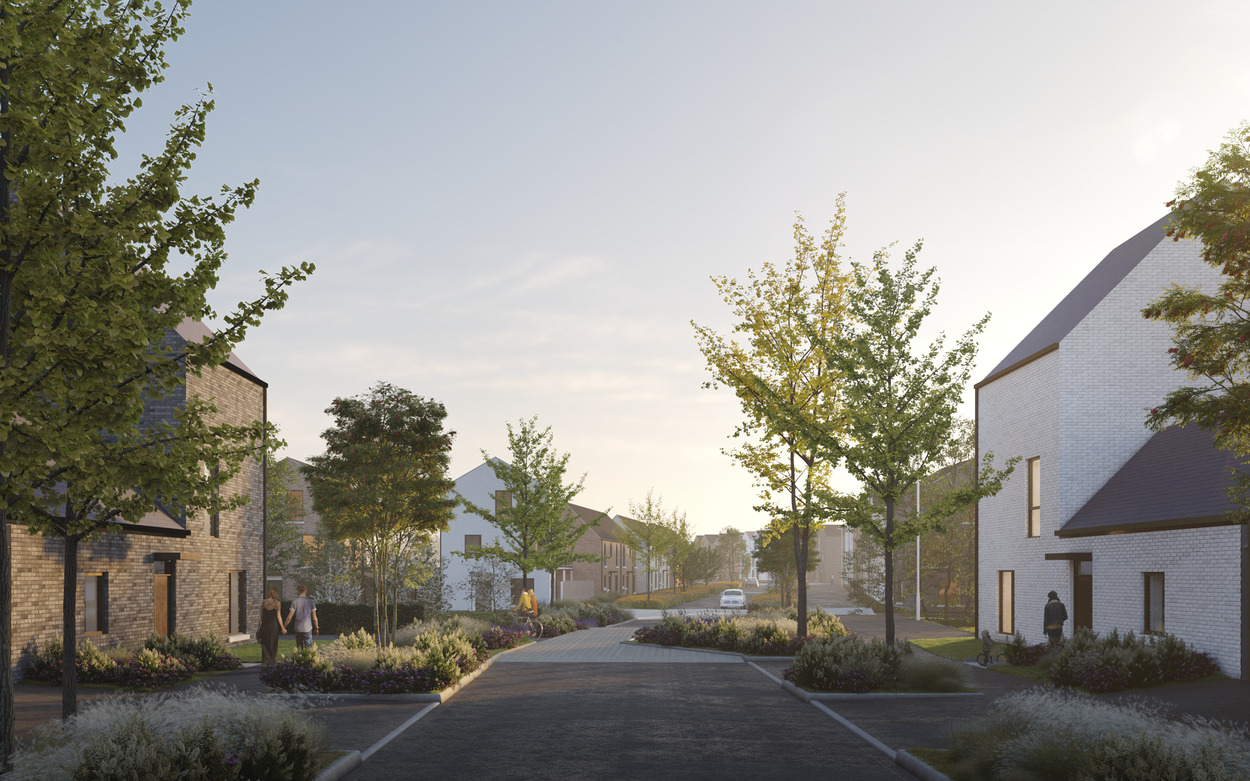
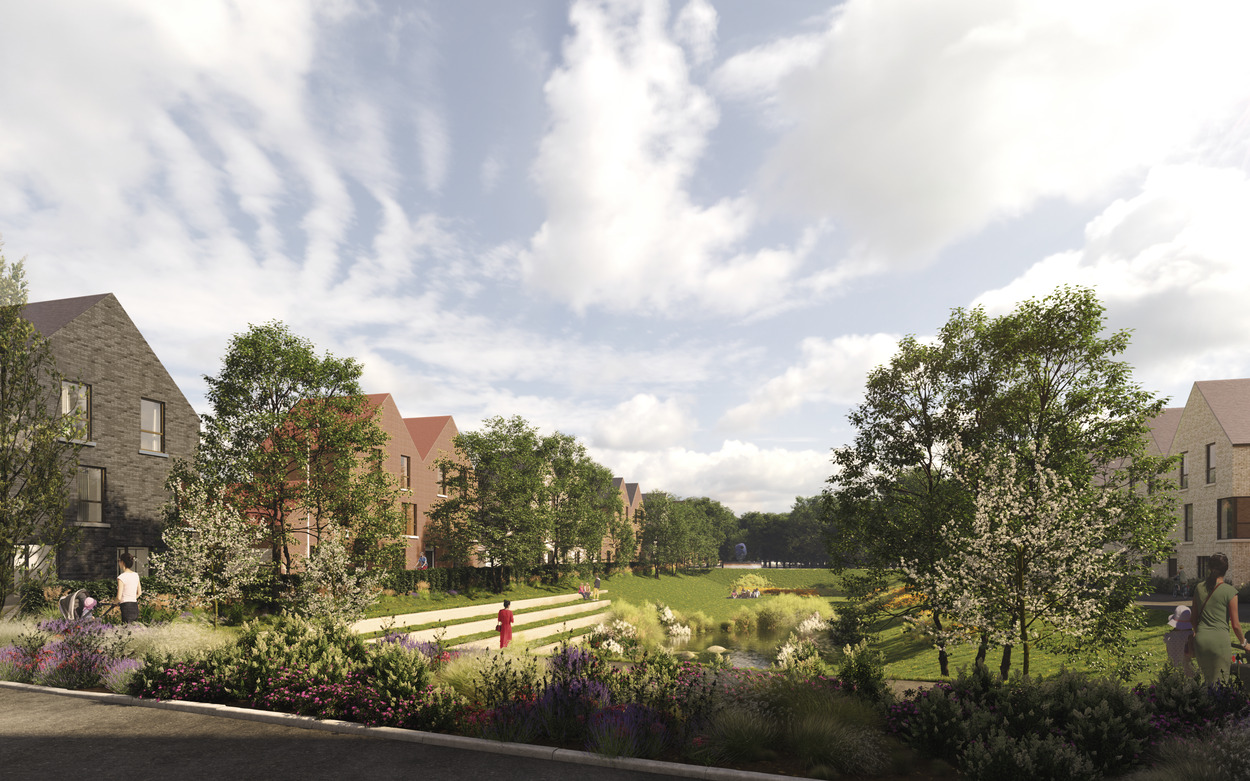
This 180-acre site next to Cambridge Airport will become a new urban village and eastern expansion to the city, providing 1,300 homes, of which 5 prototype houses are “Active Buildings”. The site also provides a primary school, local shops and a country park – plus a new business park focused on motor showrooms.

The Active Homes will incorporate high-performance fabric as well as low carbon technologies to reduce energy usage. Full energy and environmental monitoring will be carried out, and if the results are positive the prototypes will be scaled up across the masterplan. 

Active Building Centre was chosen for this project as an innovative partner was needed that could support the project team with the specification of the renewable energy systems.

Key information

  • Client: Hill Marshall
  • Developer: Hill Marshall 
  • Architects: Pollard Thomas Edwards
  • Location: Cambridge
  • Engineers/consultants: Pollard Thomas Edwards, Active Building Centre 
  • Project type: New-build
  • Number of homes: 5 “Active Homes” with a further 16 planned, wider masterplan of 1300 homes and 1,599m² of retail and commercial space, and a primary school
  • Sector: Mixed-use 
  • Key dates: First phase handover October 2021

Key facts/highlights

  • Net zero operational carbon
  • 5 prototype homes are being monitored in detail with 18 months of post-occupancy evaluation (POE) carried out by PTE and the Active Building Centre
  • The Resident’s behaviour and experience will also be tracked and monitored to help assess performance
  • The homes will be compared to two Marleigh standard homes to assess the benefits
  • 16 more Active Homes are being planned for the next construction phase and these will also have POE
  • Use of low carbon technologies including PV panels, MVHR, batteries and heat pumps

Energy performance

  • Energy Use Intensity (EUI) target: 70 kWh/ m²/yr (RIBA 2025)
  • BREEAM (non-domestic) target: Excellent
  • Fabric Energy Efficiency (FEES): 39 and 46 kWh/m²/yr
  • Air tightness: 0.6 m³/h/m² @50Pa
  • U values:
    • Roof – 0.1 W/m²K
    • Floor – 0.1 W/m²K
    • Walls – 0.12 W/m²K
    • Door – 0.62 W/m²K
    • Windows – U-0.80 W/m²K average, G-0.5 average
  • Solar panels on east-facing roofs, with modelling estimating that this will generate 30kWh/m2/year
  • Mechanical Ventilation and Heat Recovery (MVHR)
  • Air source heat pump
  • No thermal bridging at building junctions
  • 500mm insulation in the roofs

Active Building Centre is leading on Building Performance Evaluation (BPE) and carrying out full energy and environmental monitoring for 18 months. This will be on 7 homes, including 2 typical Marleigh homes that are acting as a control.

Pollard Thomas Edwards and Hill are leading on resident surveys and construction site reviews with plans to engage a University partner to help with analysis and dissemination.

There is expected to be a performance gap, with key learnings being taken from the prototypes, with an assessment of how big of a gap and why.

Materials and construction

  • The Marleigh Active Homes are being built using traditional construction
  • Low VOC paints and finishes have been specified throughout the homes

EV charging

EV charging is available for all Marleigh Active Homes. 

Thermal comfort and resilience

Use of CIBSE TM59, design methodology for the assessment of overheating risk in homes.

Access to green space and amenities

The development includes a school, community centre and non-residential units. 

Safety and security

The scheme complies with secured by design.

Inclusive living

The project meets requirements of lifetime homes.

Quotes

Andrew Beharrell, Senior Partner, Pollard Thomas Edwards

“This is a great opportunity to create a new urban quarter for Cambridge. We want to bring to the east side of Cambridge a quality of design and long-term stewardship which can compete with the very best in the City and with international exemplars. Working for a single landowner, with a commitment to the area and a track-record in technical innovation, is a very promising start.”

Further information and images

Case study kindly funded by MCS Charitable Foundation